Plan a five-character session around your real time
A repeatable session worksheet for preparation, shared tasks and an honest time budget.
A shared plan starts with the slowest step
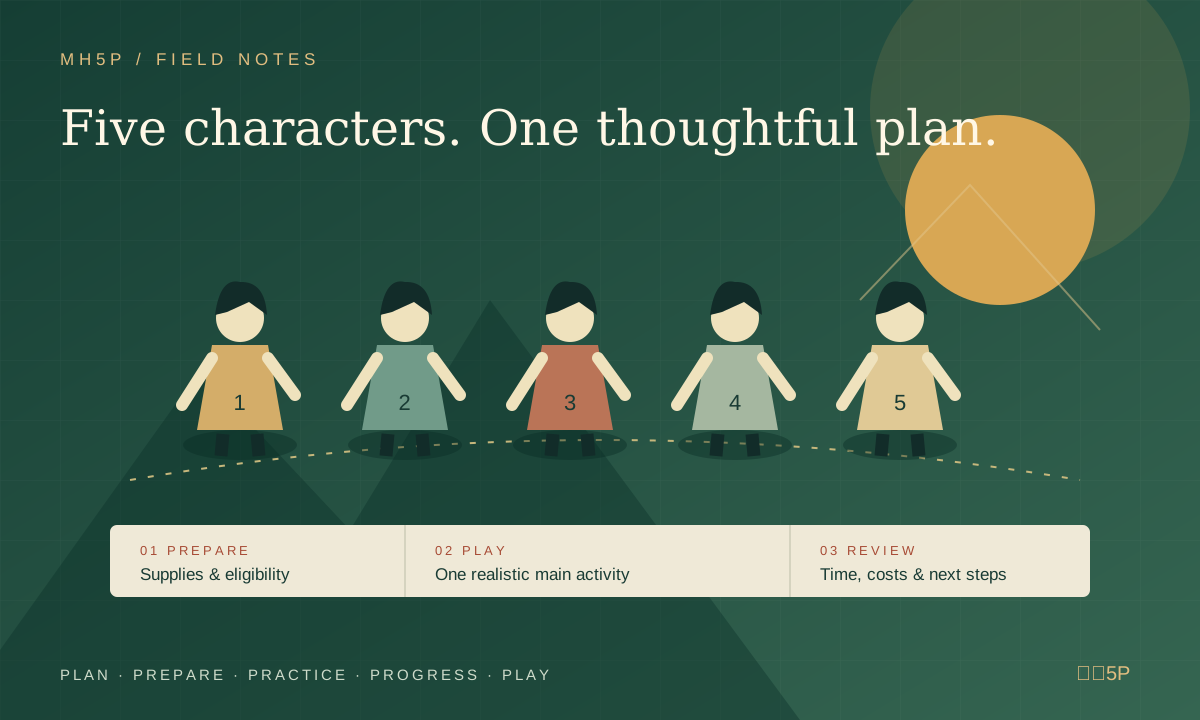
A five-character session is not simply a one-character plan multiplied by five. Preparation, inventory checks and travel can overlap, while some actions require attention one character at a time. Start by listing the tasks every character is eligible to join. Check requirements in the current game interface rather than relying on an old guide. This article is a planning method; it does not specify a team composition, guarantee income or recommend automation.
Give preparation a visible budget
A plan that starts its clock only after everyone is ready hides a recurring cost. Include checking supplies, clearing inventory, confirming the destination and resolving missing requirements. For a hypothetical 90-minute window, you might reserve 15 minutes for preparation, 55 for a main activity and 20 for finishing and a short fallback task. These figures are an example of time allocation, not estimates of any specific dungeon or event.
Measure your own run
For three sessions, record planned start, actual start, finish time and the reason for interruptions. Separate waiting from active play. A single unusually fast run is a poor planning baseline; use a typical completed run and preserve a buffer. If a task often overruns, give it a larger window or move it out of short sessions. Do not interpret community claims about speed as a promise for your equipment, connection or familiarity.
Keep rewards and effort in separate columns
Write down confirmed receipts, direct consumable costs and elapsed minutes. Keep unsold items in an inventory column instead of counting their full asking price as realized income. If an item is later sold, record the transaction then. The session budget tool calculates net silver from the values you enter and divides it by hours, but it cannot verify a transaction or predict future rewards. Random outcomes should remain visible rather than being presented as stable income.
Finish with a useful next action
End the session by recording what is ready for next time and one bottleneck worth fixing. A short checklist is more useful than a large plan you cannot follow: supplies ready, inventory space checked, next task selected. If the remaining time is too short, stop rather than forcing another long activity. The objective is a routine that fits your available time, not a checklist that grows indefinitely.
Method & provenance
This is an original planning explanation. Examples are hypothetical, not live quotes or claimed in-game tests. Text and diagrams were produced with AI assistance. Check the current game interface and official announcements for actual game rules.
Fantasy Westward Journey official website · Editorial & corrections policy