Your summoned pet's skill-book plan: choose, order, and cap the cost
Write the full skill list, apply the cheapest books first, and cap the budget before the first book lands — so no single skill book ruins the pet.
Audit the pet before the first book
A skill book costs the same whether it lands on a pet worth training or a pet that should have stayed in the market. Before buying anything, run the three-question audit. First: what job is this pet for — daily task fights or player-versus-player arenas? A task pet needs speed and finishing power; an arena pet needs durability. Second: how many skill slots does it already have? Every slot on your plan is one 打书 attempt — applying a skill book to the pet — and a pet with too few slots will never hold a full build. Third: does its talent profile fit the job — an attack-built pet with defense-leaning talents is a rebuild waiting to happen. If the pet fails any of these, sell it or use it as-is. Books cannot fix a bad foundation.
Write the full list, then rank it
Once the pet passes the audit, write the complete skill list on paper before touching a book. For a five-slot task attacker, a common target set looks like this: a multi-strike skill, a life-drain skill, a sneak-attack skill, a critical-strike skill, and one flex slot such as awareness or a revival skill. Confirm which books exist in your current game version first, because the available book pool shifts over time. Now rank the list by how much is lost when that slot goes wrong: core output skills first, the flex slot last. This ranking is your打书 plan in reverse — you打书 from last to first, so the most important skills land when there is nothing expensive left at risk. Never start buying books without the ranked list. Improvising mid-way is how players spend three times the budget and end up with a four-skill pet.
Cheapest first, core last
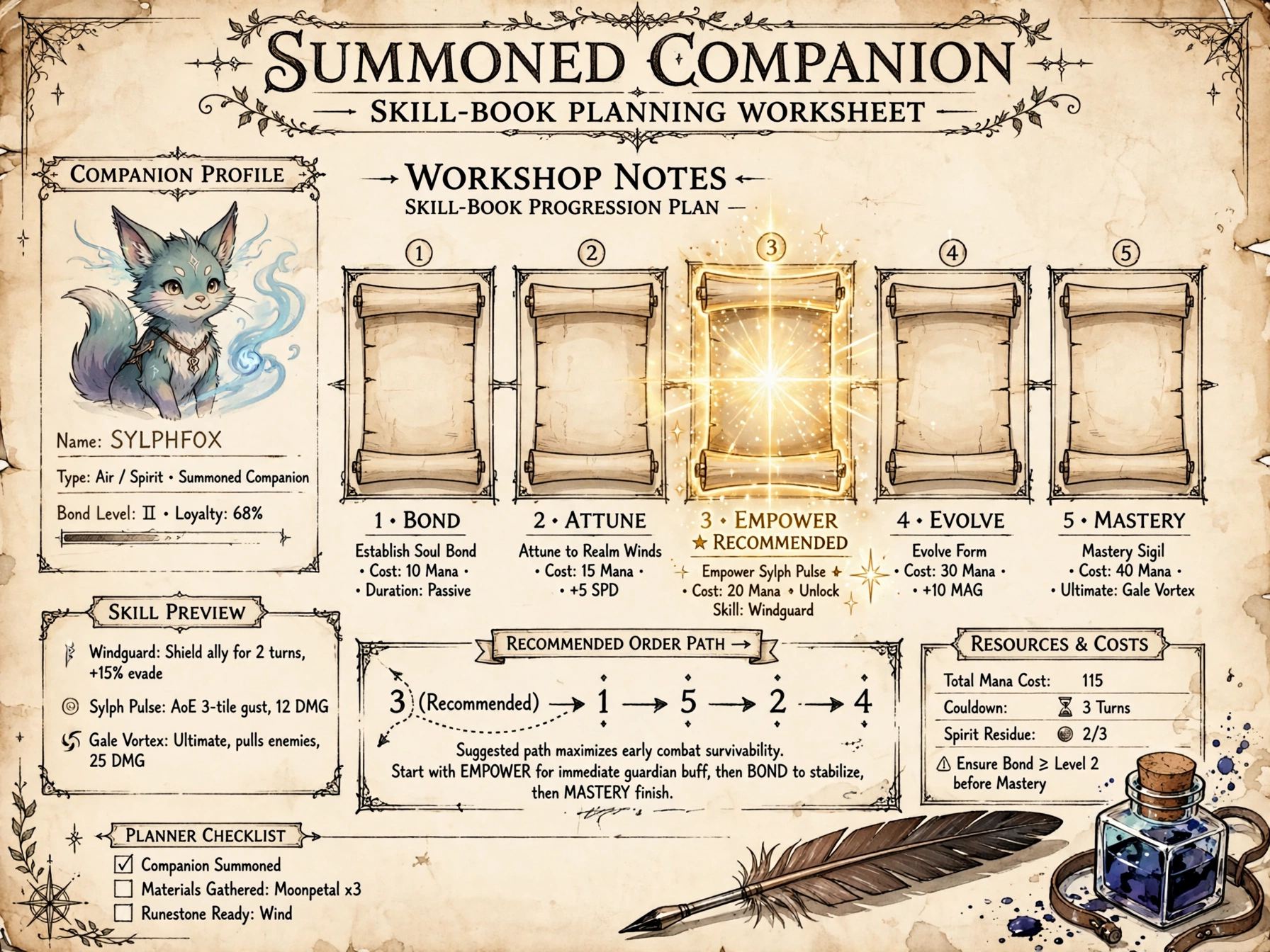
Take a six-slot task pet and a five-skill ranked list: A is the core skill with the most expensive book, then B, C, D, and E, the cheapest flex book. Step one:打书 E first — the cheapest book occupies a slot. Step two: D, then C, then B, in ascending order; every打书 risks knocking out an existing skill, and you want that risk to fall on cheap books you can re-buy, not on the expensive core. Step three:打书 A last, when nothing valuable is exposed. Step four: after each book, read the pet's actual skill list before buying the next one — never打书 two books back-to-back without checking. Step five: if a core skill gets knocked out, stop immediately and re-plan instead of chasing it. Keep a written log for every pet: book bought, price paid, result. After ten books you will own a real cost curve for this pet, and that beats any guide's estimate.
Cap the budget with real numbers
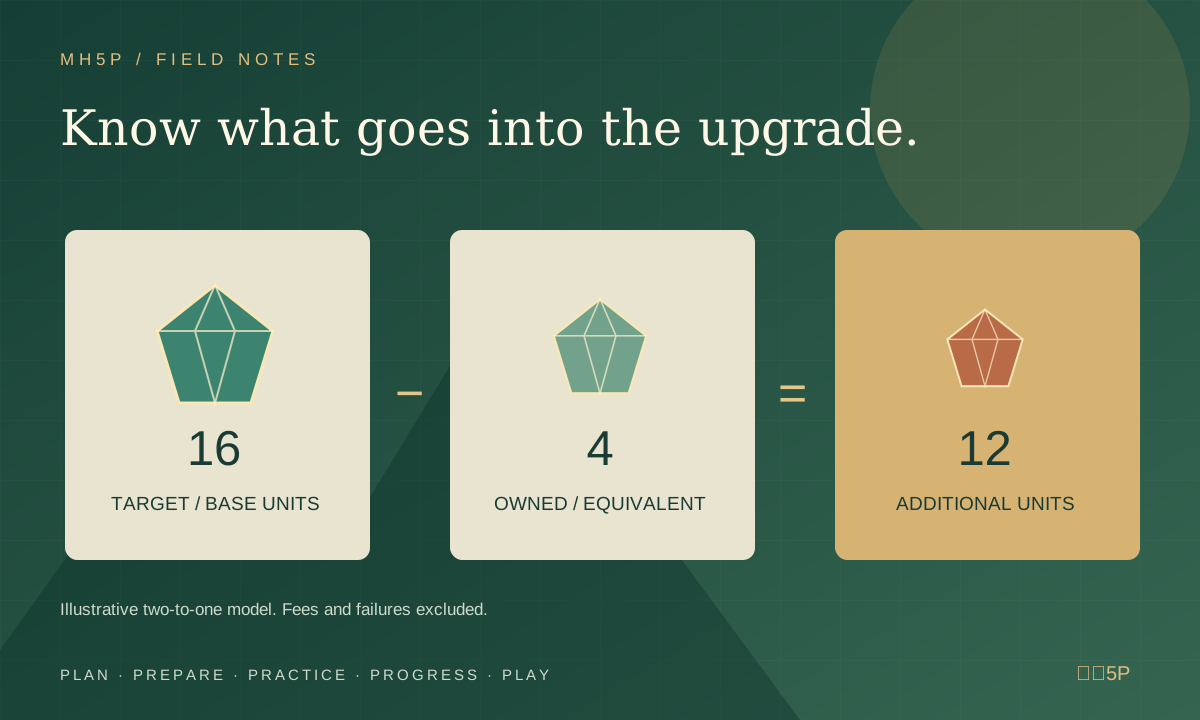
Before the first book, write down a hard silver cap. One practical frame: cap the books at roughly 40–60% of what a finished pet of this type is worth on the market. Worked illustration: if comparable finished pets trade around 5 million silver — a hypothetical example, use your server's real quotes — cap the books at 2–3 million. Count every book bought, including the ones that got knocked out; knocked-out books are spent money, not free attempts. If the cap is reached and the build is not complete, the pet becomes a seller's problem: list it honestly as an unfinished build rather than chasing the finish with emotion. The discipline that saves money is fixing the number before desire enters the picture. Check current book prices in the game; the percentages are the planning frame, the prices are yours to fill in.
When to advance, when to sell
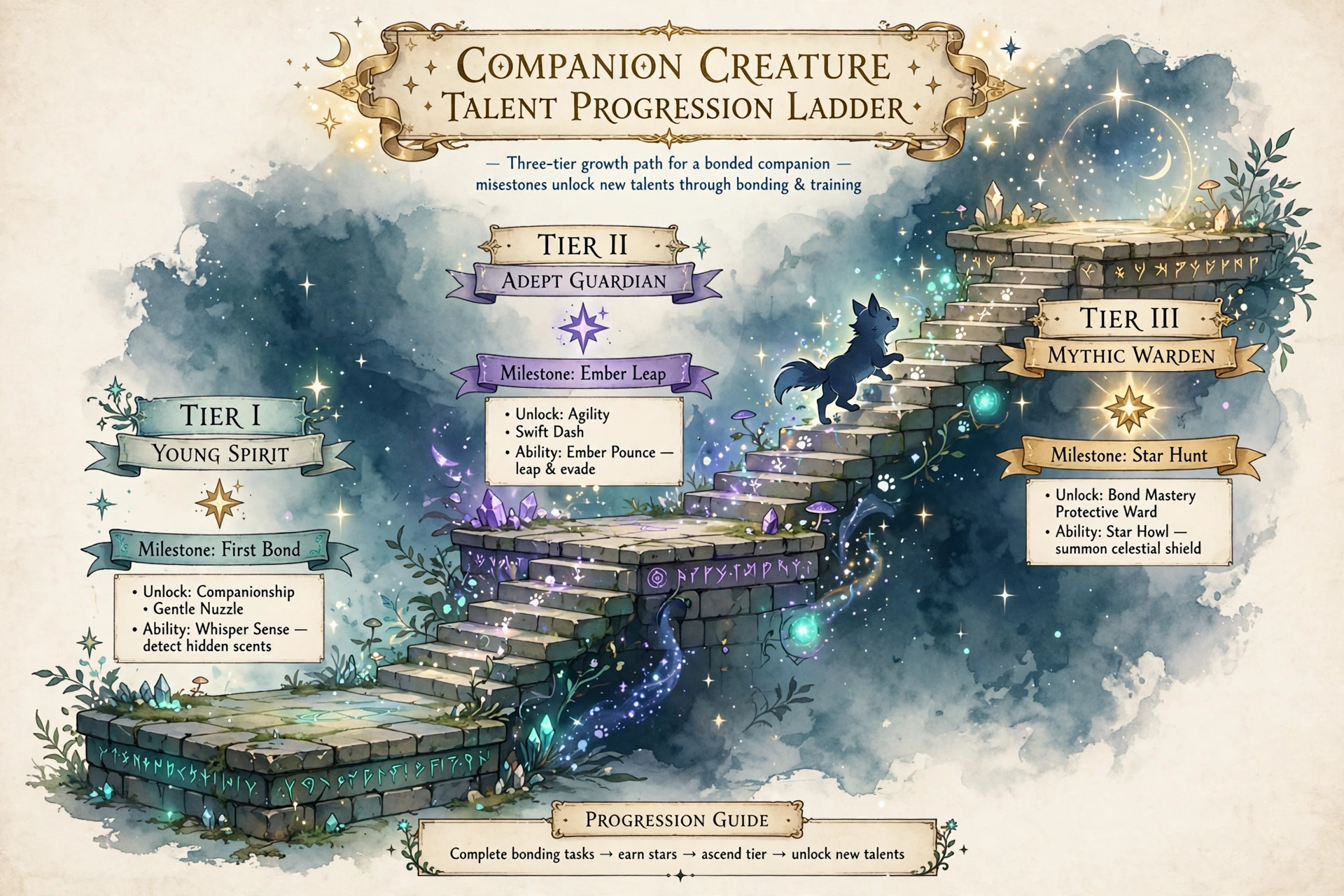
A finished build is not the end: many pets have an advancement tier that unlocks further growth. Check the in-game requirements — level, skill count, and materials — in the current client before planning around them, because requirements change between versions. Advance only after the skill list is final; advancing first and rebuilding later wastes the advancement materials. The mirror decision is the sell check. Re-run the three-question audit after any bad streak: if the pet lost a core skill twice, or the budget cap is gone, sell instead of rebuilding. A common exit is listing the pet at 60–70% of a finished build's market price — an honest unfinished listing sells faster than a sunk-cost rebuild nobody believes. Pets are projects, and projects have budgets. The players who stay profitable treat the stop rule as part of the plan, not as failure.
Method & provenance
This is an original planning explanation. Examples are hypothetical, not live quotes or claimed in-game tests. Text and diagrams were produced with AI assistance. Check the current game interface and official announcements for actual game rules.
Fantasy Westward Journey official website · Editorial & corrections policy